Okay, imagine you’re chilling, scrolling through your phone on a quiet afternoon, when—pow—a picture hits you like a bolt. A squirrel that looks like it rolled through an artist’s paint tray, bursting with purples, oranges, blacks, and creams. I kid you not, I rubbed my eyes the first time I saw one. Is this real? Or some clever edit? Turns out, it’s very real. Meet the Malabar giant squirrel, also called the Indian giant squirrel or Ratufa indica in science speak. This isn’t your usual backyard critter; it’s a dazzling flash of color in India’s wild forests, grabbing everyone’s attention online. Why all the fuss? Stay with me—I’ll lay out what makes this squirrel so incredible, from its gravity-defying jumps to the challenges it’s up against. By the end, you’ll be cheering for these treetop legends, no doubt.

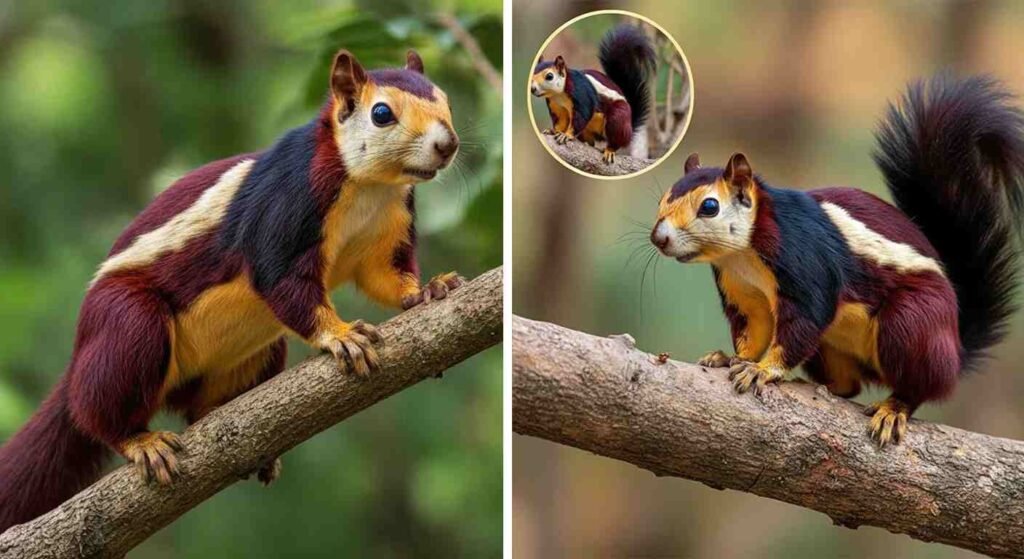
Table of Contents
- What Makes the Malabar Giant Squirrel So Special?
- Where Does This Colorful Creature Live?
- A Day in the Life of a Rainbow Squirrel
- Why the Rainbow Colors? The Mystery Unveiled
- Conservation Challenges: Protecting India’s Treetop Treasures
- Viral Sensations: How the Malabar Squirrel Took Over Social Media
- Fun Facts and Trivia About the Malabar Giant Squirrel
What Makes the Malabar Giant Squirrel So Special?
Let’s start with the basics, because honestly, this squirrel breaks all the rules we think we know about squirrels. Forget those little gray ones raiding your bird feeder. The Malabar giant squirrel is huge—we’re talking up to three feet long from nose to tail tip, weighing in at around four pounds or so. That’s like the size of a small dog! Its body stretches 10 to 20 inches, and that fluffy tail adds another foot or two, helping it balance like a pro gymnast on high wires.
But the real showstopper? Those colors. Oh man, the colors. Think rich maroons flowing into fiery oranges, mixed with splotches of black, cream, and even a whisper of purple that catches the sunlight just right. No two squirrels look exactly alike; each has its own unique pattern, like nature’s custom paint job. Scientists call it a “conspicuous one-, two-, or three-toned color scheme.” It’s why folks dub it the “rainbow squirrel.” I mean, who wouldn’t? In the right light, it looks like a walking rainbow, blending purples and oranges that pop against the green canopy. And get this—there are subspecies with even wilder variations. One from southern India has mostly black with a pale tail tip, while another might sport creamy buffs and brown ears. Sadly, one of those, R. i. dealbata from Gujarat, might be gone for good; surveys can’t find them anymore.
I remember chatting with a friend who’s a wildlife buff, and he swore the first photo he saw online looked fake. “No way that’s natural,” he said. But it is. These squirrels aren’t just pretty; they’re built for life in the trees. Their paws stick to bark like they’ve got some kind of superpower, claws digging in so they can race up trunks like it’s no big deal. Those small, round ears—sometimes with adorable tufts—give them a quirky edge. And their eyes? Big, bright, always on the lookout for trouble. It’s like evolution said, “Hey, let’s make a squirrel that’s part athlete, part artist.”

Where Does This Colorful Creature Live?
You won’t spot these beauties in your local park. They’re picky about their homes, sticking to India’s lush forests. Think Western Ghats, Eastern Ghats, and up into the Satpura Range in Madhya Pradesh—basically, from about 22 degrees north down south. They love tropical spots: deciduous woods where leaves fall seasonally, semi-deciduous with river-edge greens, and moist evergreens that stay leafy year-round. Altitudes? Anywhere from 600 to 7,500 feet up. But here’s the catch—they need tall trees with thick branches for nests. Average nest tree? About 36 feet high. No skimpy shrubs for these guys.
Endemic to India, meaning they’re found nowhere else on Earth. That makes them special, but also vulnerable. Their range is patchy because they hate degraded habitats. Imagine dense undergrowth in broadleaf forests, mixed bamboo spots, or wooded ravines—that’s their jam. In places like Maharashtra, they’re even the state animal, called “shekaru” in Marathi. I’ve always thought that’s cool—like how pandas rep for China. But with forests shrinking, these squirrels are squeezed into smaller pockets. More on that later; it tugs at the heartstrings.

A Day in the Life of a Rainbow Squirrel
Ever wonder what a day looks like for one of these vibrant critters? They’re diurnal, meaning active during the day, mostly in the early morning and late afternoon. Midday? Nap time in the shade. Totally arboreal—they live in trees and rarely touch ground. Why risk it when you can leap 20 feet between branches? Watching videos of them jumping is mesmerizing; it’s like parkour in fur.
They’re mostly solitary or in pairs, super territorial. No big squirrel parties here. They build big, globe-shaped nests from twigs and leaves on thin branches—multiple ones in a spot, like backup homes. When danger lurks, say a leopard or owl, they don’t bolt. They freeze flat against the trunk, blending in. Smart, right? Diet-wise, they’re herbivores at heart: fruits, flowers, nuts, bark. But they’ll snack on insects or eggs if handy. And here’s a fun bit—they stash food in treetop caches, not underground like some squirrels. Seed dispersers extraordinaire, they help forests grow.
Breeding? They pair up, and babies come in litters, though details are fuzzy. From related species, births happen in spring or fall, with tiny pups weighing about 2.6 ounces. Imagine fluffy rainbow babies—adorable overload. But life’s tough; predators and habitat loss make survival a gamble.

Why the Rainbow Colors? The Mystery Unveiled
Ah, the million-dollar question: why so colorful? Scientists scratch their heads on this. Maybe those wild colors—maroons, oranges, purples—let them disappear into the forest’s dappled light, dodging predators like leopards below. Or perhaps they’re showing off for mates, strutting their vibrant fur like nature’s fashionistas. Some even think the patterns mimic birds or other critters to throw off hunters. Whatever’s going on, it works—those predators don’t seem to spot them easily. In forests with leopards and eagles, standing out could be deadly, so probably helps them hide in plain sight.
I love how nature throws these curveballs. Like, why not plain brown? But nope, evolution went bold. It reminds me of peacocks—flashy for a purpose, even if we’re still figuring it out. And those colors? They shift with light, making photos viral gold.
Conservation Challenges: Protecting India’s Treetop Treasures
Now, the not-so-fun part. These squirrels are “Least Concern” on the IUCN list, but that’s no free pass. Populations dip due to habitat loss—deforestation for farms, roads, you name it. They’re hunted for pelts too, soft and velvety. Fragmented forests mean no safe corridors to move. They’re a sign of healthy ecosystems; where they thrive, forests do too.
Recent news hits hard. In 2025, Wayanad farmers got arrested for killing one with an air gun—they said it wrecked crops like coconuts and fruits. Protests erupted, highlighting human-wildlife clashes. It’s heartbreaking; farmers struggle, but so do animals. Zoos like Pune’s breed them in captivity, a tough gig, but successful. Bright spot: numbers rose 8% in some areas back in 2016. We need more protected spots, like Bhimashankar Sanctuary. Personally, it bugs me how we encroach on their space. Time to plant trees, folks.

Viral Sensations: How the Malabar Squirrel Took Over Social Media
These squirrels aren’t just forest dwellers; they’re internet stars. Photos by folks like Kaushik Vijayan went mega-viral in 2019, with people gasping, “Is this real?” On X, these squirrels are getting all the love—think tons of heart-eyes emojis. A 2024 post showed one munching away in Nelliyampathy, its colors screaming against the greenery. Another clip, shared by an IAS officer, caught one soaring through the Western Ghats—total ninja energy. Even a rare albino one in Mahabaleshwar had everyone freaking out.
In 2025, bloggers are dropping posts like “100 Wild Facts About These Treetop Rockstars.” One photo got called “the pic that blew up the internet,” and honestly, it’s no exaggeration. Seeing these squirrels hits you hard—pure awe, but with a nudge to protect them before it’s too late. I scroll and think, “We gotta share more, do more.”

Fun Facts and Trivia About the Malabar Giant Squirrel
Quick hits to wow your friends:
- Biggest squirrel on Earth? Yup, up to 3 kg.
- Omnivorous twist: Mostly plants, but eggs and bugs? Fair game.
- State pride: Maharashtra’s mascot.
- Rare sightings: Shy, so spotting one? Lucky day.
- Role in forests: Seed spreaders shape biodiversity.
And that possible extinct subspecies? A reminder of what’s at stake.
Wrapping this up, the Malabar giant squirrel isn’t just a pretty face—it’s a symbol of India’s wild magic, a creature that dazzles and demands our care. From viral snaps to conservation fights, it’s got my heart. Next time you see a plain old squirrel, think of its rainbow cousin and smile. But don’t stop there—support forest protection, share the word. These treetop treasures deserve to leap on for generations. What about you? Ever seen one? Hit me up in the comments. Stay wild out there.


“Animal lover and storyteller, Nalin shares heartwarming and viral pet moments that bring joy to pet parents everywhere. With a passion for furry friends and their quirks, he creates fun, relatable content on Pawcareguide that celebrates the love, laughter, and everyday adventures pets bring into our lives.”